Case study 03 · Equipment and route distribution · Puerto Rico
Coordinating orders, deliveries and equipment with less manual follow-up
CoquiCool places slush machines in small businesses and sells them the flavor concentrate on recurring routes. Orders were typed more than once, and deliveries, invoices and follow-up depended on memory and phone calls. I built one system that links each business location to its machine, orders, route, invoice and payment, so a small team can keep track of every location.
System: CoquiCool platform, with a WhatsApp assistant and Otello (voice)
- My role
- Founder. I designed the processes and built the system
- Business
- Slush machines on concession; concentrate sold by the gallon
- Team
- 2 people today (it was 4); I manage it remotely from San Antonio
- Coverage
- Puerto Rico
My part in it
Each customer is small: a bakery, a gas station, a corner store. But each one needs the full cycle: a contract and a machine, orders, deliveries, an invoice, a payment, and a follow-up when it stops buying.
I own the business. I designed how each step works and built the system that supports it. Today the team is me and one driver: the driver handles deliveries and installations in Puerto Rico, and I run the business from San Antonio, traveling to the island only when it is really needed.
The same order was handled several times
Orders arrived by phone and WhatsApp, often from store employees who changed from month to month. The old web order form only opened a WhatsApp message, so every order was typed again by hand.
Customer details, machines, deliveries and invoices were kept in different places. Knowing which store was due for a delivery, or had stopped buying, depended on memory and phone calls. With a small team, every repeated task took time away from sales and service.
The location, not the customer, was the unit of work
Looking at real orders showed that the customer record was the wrong anchor. One owner could have several stores, and several stores could share one phone number. But deliveries, machines and sales happen at a specific location. From there I made four decisions:
Each location has its own ID
Orders, machines and reports are tied to the location, never to a phone number or email, even when stores share an owner.
Ordering without passwords
Store staff change often, so accounts did not work. Each location has a permanent order link that already knows which store it is.
Record the order once
An order goes straight into the system with the right location and prices, so nobody types it again.
AI for routine questions, people for judgment
An assistant answers common questions at any hour and passes the conversation to a person when someone asks for one or the case is unclear.
One chain from the order to the payment
- 1LocationCustomer, store, machine and contract.
- 2OrderFrom the store's link or entered once by us.
- 3InventoryConcentrate reserved from stock.
- 4RouteAssigned to the driver's day.
- 5Invoice and paymentCreated from the order and synced to QuickBooks.
Automated step · plain border = person
Each step uses the record created by the step before it. An order placed through a store's link arrives with its location, prices and machine. It goes to the driver's route, the delivery is invoiced from the order, and the invoice is synced to QuickBooks for collection and accounting.
Two tools support this process. A WhatsApp assistant answers routine questions from new leads and current customers and hands unclear cases to me. Otello, a voice assistant I built, lets me check and update the system by voice when I am away from a computer.
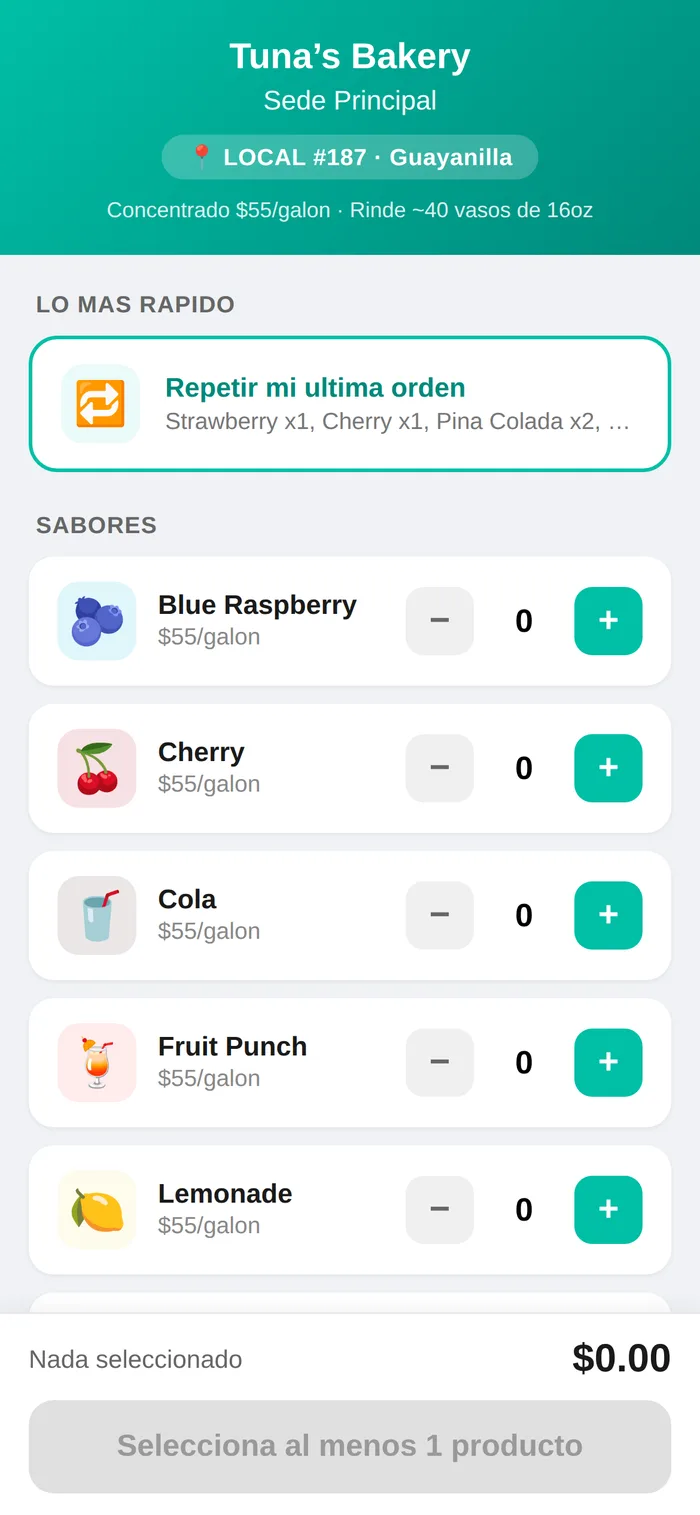
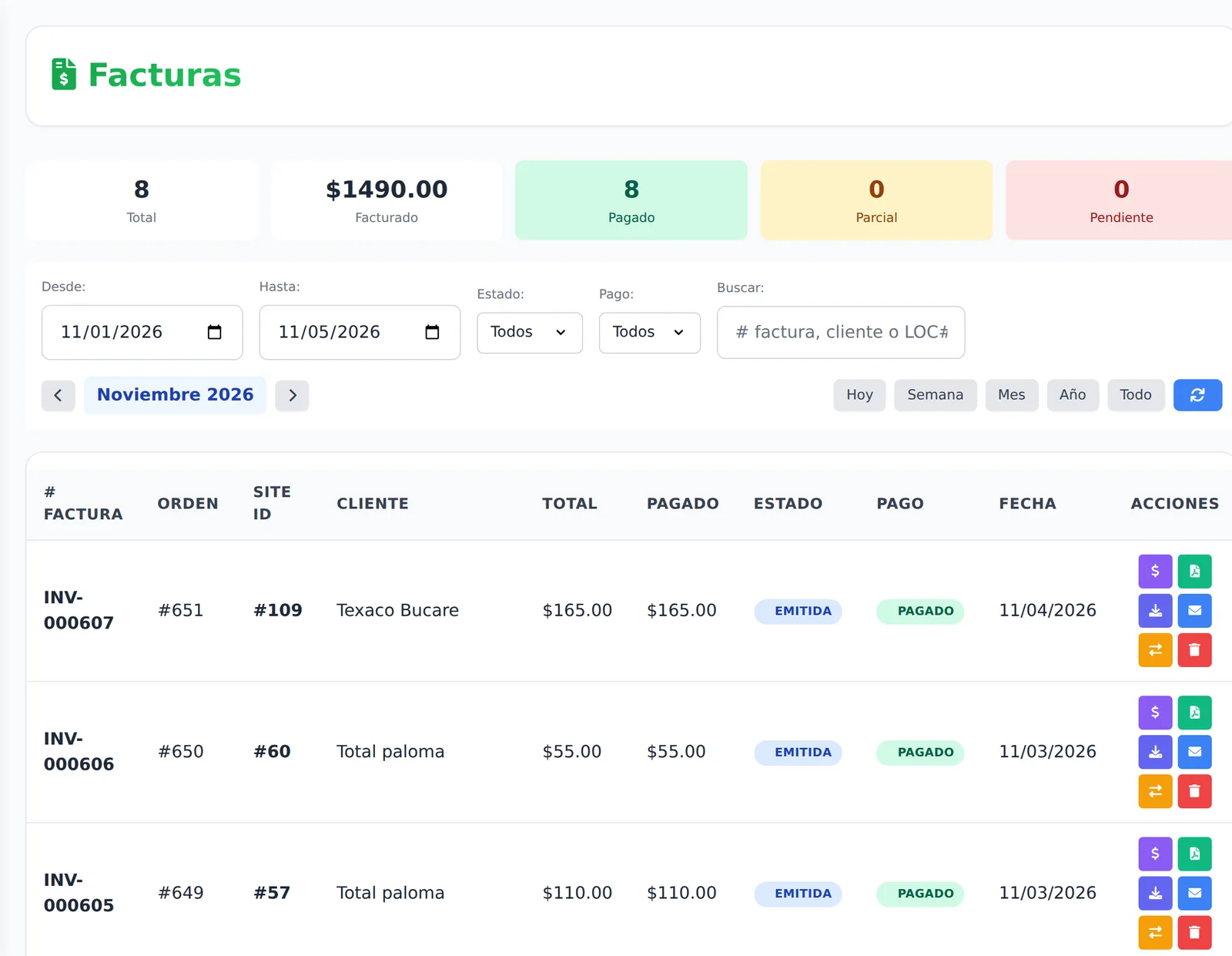
Orders typed once, and every location visible
Orders now arrive once, tied to the right location, and move to delivery and invoicing without being typed again. Because every order belongs to a location, the system shows each store's buying rhythm and flags stores that have stopped ordering or need service, instead of relying on memory. Routine questions get an answer at any hour, and the cases that need judgment still reach a person.
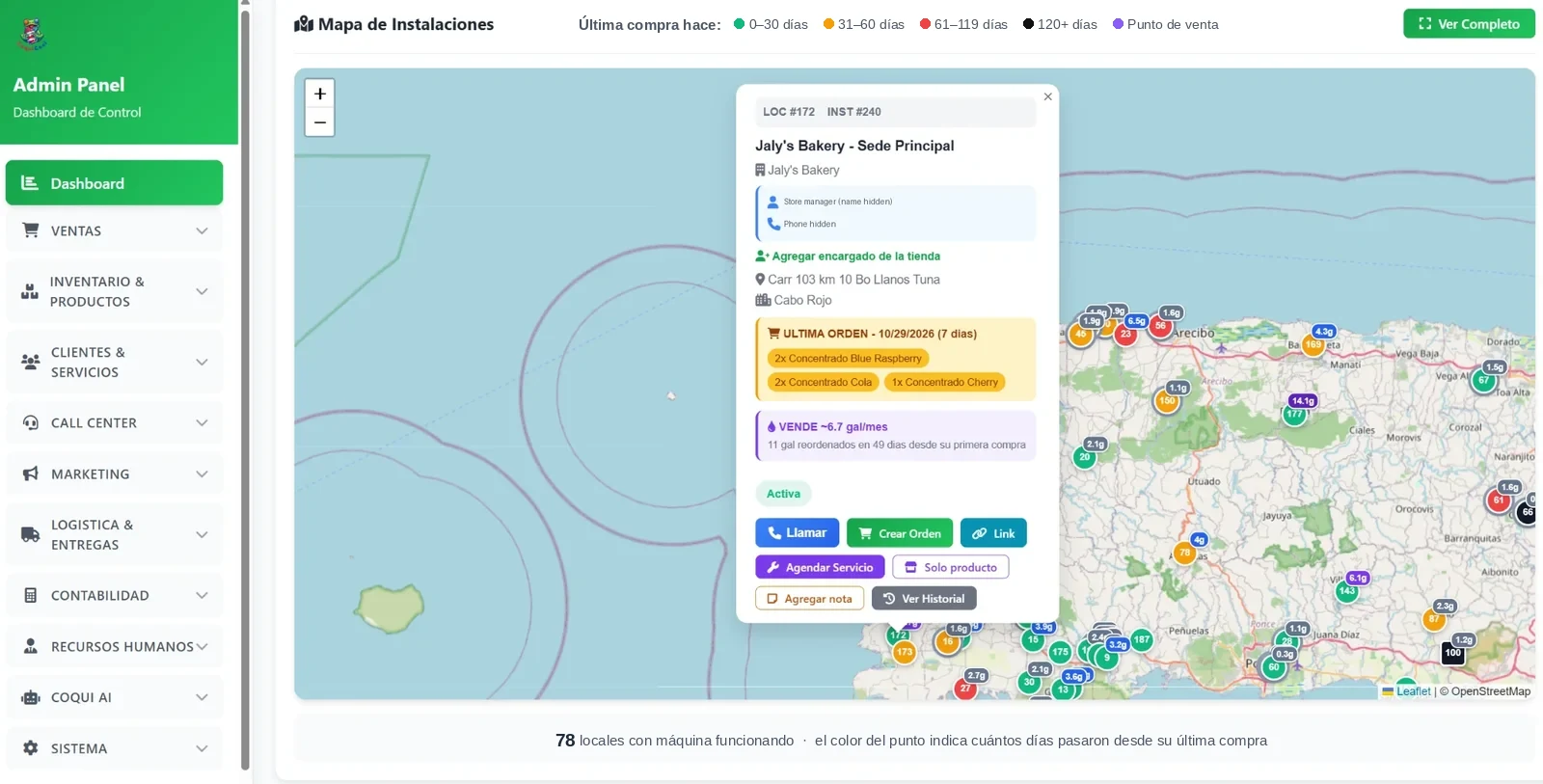
Screens from the live system, in Spanish. Phone numbers and personal data are hidden.
Built with
PHP · MySQL · installable web apps (PWA) · QuickBooks Online API · Twilio (WhatsApp) · maps and GPS · AI language models · AI-assisted development.